
Why Fire Inspections Matter
Fire safety compliance is not something building owners can afford to set and forget. Regulations change. Buildings age. Maintenance work and renovations create new vulnerabilities. Regular fire inspections are the mechanism that keeps a building genuinely safe, not just compliant on paper. Firestop provides professional fire inspections and compliance services for Melbourne’s commercial, industrial, and multi-residential buildings, helping owners meet their legal obligations with confidence.
Key Takeaways
- Fire inspections are a legal obligation for building owners in Victoria under the Building Act 1993 and Essential Safety Measures regulations.
- Passive fire protection systems, seals, barriers, and fire-rated assemblies, deteriorate over time and require periodic verification to remain effective.
- Non-compliance exposes building owners to significant liability in the event of a fire incident, regardless of whether they were aware of the deficiency.
- Professional fire inspections produce documented evidence of compliance that satisfies regulators, insurers, and building surveyors.
The Legal Foundation: What Victorian Law Actually Requires
Building owners in Victoria carry specific, ongoing legal obligations when it comes to fire safety. These obligations are not limited to the moment a building is constructed and certified. They continue for the entire life of the building, and the responsibility sits squarely with the owner.
Under the Building Act 1993 (Vic) and the Building Regulations 2018 (Vic), owners of commercial, industrial, and multi-residential buildings are required to maintain all essential safety measures in a condition that enables them to operate effectively at all times. This includes passive fire protection systems, which are often among the most difficult elements to verify without a specialist inspection.
The annual essential safety measure maintenance reports must be completed and retained, and must be produced on request by the relevant building surveyor or fire authority inspector.
Failure to meet these obligations is not a technical offence with modest consequences. It is an enforceable breach that can result in orders to rectify, significant financial penalties, and in the event of a fire-related incident, substantial civil and potentially criminal liability.
Why Fire Inspections Are About More Than Ticking a Box
There is a temptation to treat fire inspections as an administrative obligation, something to complete annually to satisfy a regulator and file away. This framing misses the point entirely.
Fire inspections exist because buildings change. Systems degrade. Maintenance work opens penetrations that are not properly reinstated. Service upgrades create new risks. The physical condition of a building’s passive fire protection at the point of handover is rarely the same as its condition five, ten, or fifteen years later.
A professional fire inspection is the mechanism for understanding the actual current state of a building’s fire safety systems, not their theoretical state as designed, and not their documented state at practical completion. What the inspection reveals is the reality of the building as it stands today.
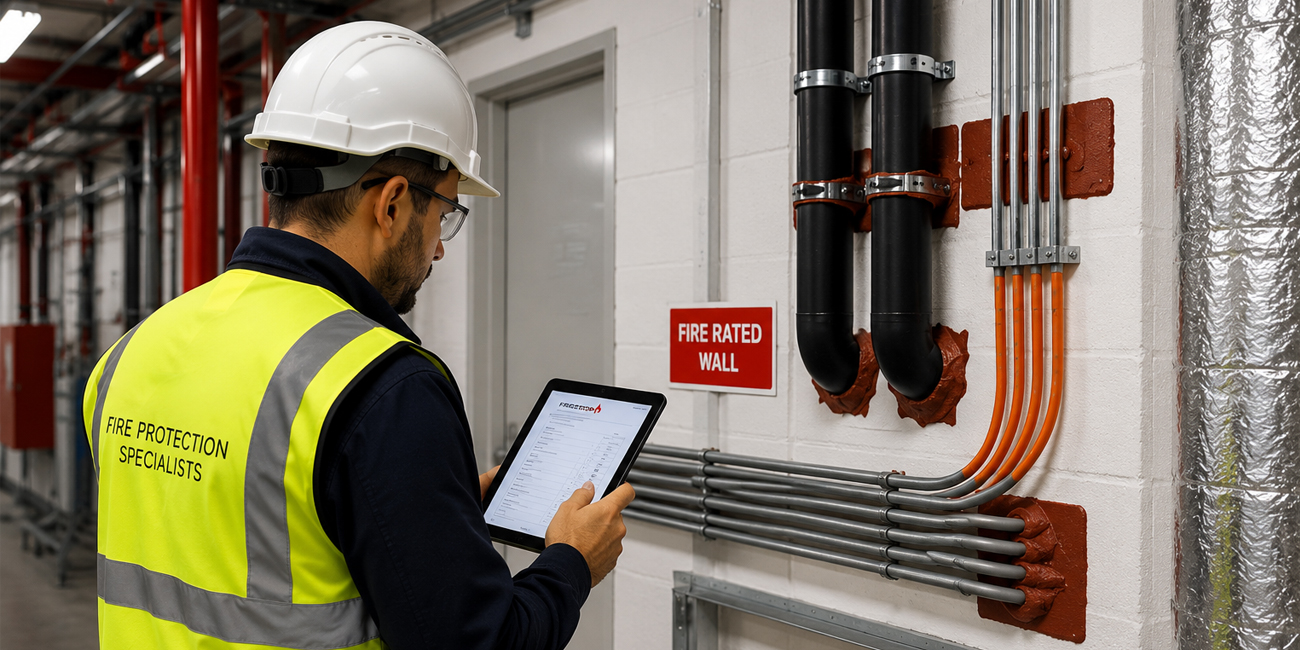
Qualified fire protection technicians play a critical role in this process by assessing passive fire systems, identifying non-compliant penetrations, and ensuring fire-rated assemblies continue performing as intended under Australian Standards and Victorian building regulations.
A significant proportion of structural fires in Melbourne’s commercial building stock involve failure of passive fire containment elements, allowing fire and smoke to spread beyond the zone of origin faster than correctly maintained systems would have permitted.

What Professional Fire Inspections Actually Assess
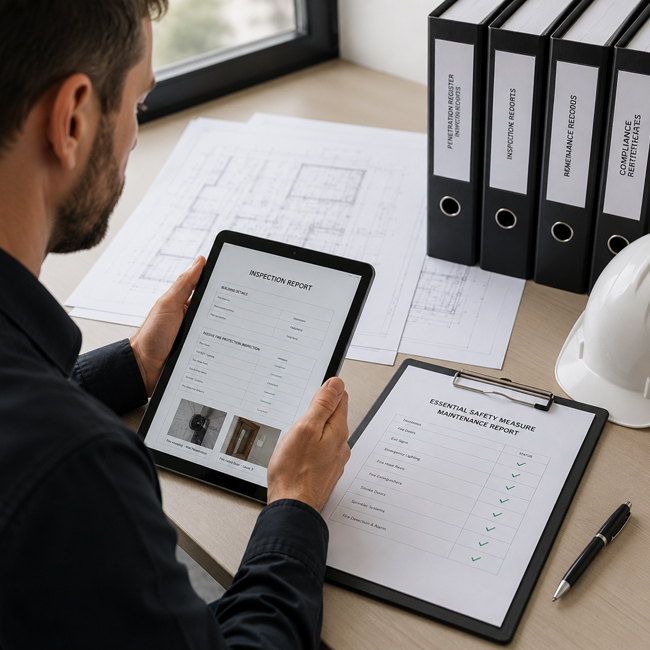
Not all fire inspections are equivalent. A superficial walk-through that looks at visible alarm systems and emergency lighting addresses only a fraction of a building’s fire safety systems. A professional passive fire protection inspection goes considerably deeper and helps identify hidden fire safety hazards that may compromise containment systems during an emergency.
A comprehensive fire inspection conducted by a qualified specialist assesses:
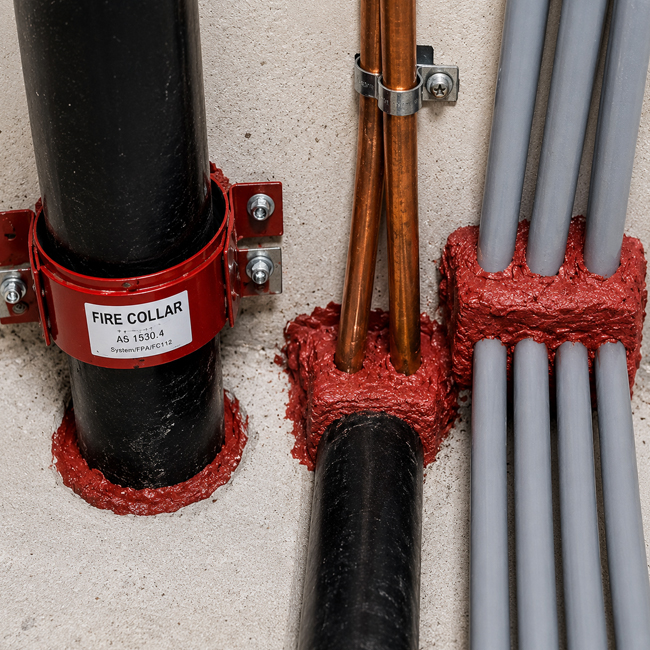
- The condition and compliance of fire-stopping systems at all service penetrations through fire-rated walls and floors
- The integrity of fire-rated bulkhead and enclosure assemblies around service risers and mechanical spaces
- Physical evidence of post-construction modifications that may have compromised fire-rated assemblies
- The accuracy and completeness of the building’s penetration register against the physical inspection findings
- Compliance of installed fire-stopping products with the applicable Australian Standards and manufacturer specifications
- Any evidence of deterioration, mechanical damage, or moisture ingress affecting passive fire protection components
Compliance certification service at Firetstop provides building owners with the documented evidence of their passive fire protection compliance status, including findings, remediation requirements, and certification of compliant systems, in a format that satisfies Victorian building regulations and supports insurance obligations.
The Consequences of Skipping or Deferring Inspections
Building owners who defer or skip fire inspections expose themselves to multiple categories of risk. These risks do not sit in the future. They are present and growing from the moment the inspection is overdue.
Legal and Regulatory Risk
Without current essential safety measure maintenance reports, a building owner is in breach of Victorian building regulations regardless of whether any actual deficiency exists. The obligation to inspect and document is independent of the inspection outcome.
Insurance Risk
Insurance policies for commercial and multi-residential properties typically require the insured party to maintain the property in compliance with applicable safety regulations. An insurer presented with a fire claim against a building where essential safety measure maintenance reports are absent or out of date may seek to reduce or refuse the claim.
Documentation gaps in essential safety measures, particularly for passive fire protection systems, are a recognised area of dispute in fire-related commercial property claims across Australia.
Personal Liability Risk
In the event of a fire-related injury or death in a building where passive fire protection systems were non-compliant, the building owner’s personal liability exposure is significant. Courts have consistently found that the duty to maintain safe premises extends beyond formal compliance to genuine operational effectiveness.
Passive fire protection non-compliance as one of the most frequently cited factors in building owner liability findings following commercial fire incidents in Australia.
How Inspections Support Ongoing Building Management
Regular fire inspections do not just manage risk. They actively support better building management by providing a documented, accurate record of the building’s passive fire protection systems over time.
A well-maintained inspection history enables building managers to:
- Track the condition of fire-stopping systems across multiple inspection cycles and identify areas of recurring deficiency
- Plan and budget for remediation work based on documented findings rather than assumptions or reactive responses
- Demonstrate ongoing due diligence to insurers, building surveyors, and prospective purchasers
- Understand the impact of maintenance and renovation activity on the building’s fire safety status between formal inspection cycles
- Provide emergency services with accurate information about the building’s fire compartmentation layout if a fire incident occurs
Buildings with consistent, documented inspection histories demonstrate lower rates of passive fire protection deficiency over time compared to buildings where inspections are conducted reactively or irregularly.
Who Needs a Fire Inspection and How Often
In Victoria, the requirement for essential safety measure inspections applies to a broad range of building classes. The specific requirements depend on the building class, age, and occupancy type under the National Construction Code.
Buildings that require regular fire safety inspection and documentation include:
- Commercial office buildings, retail centres, and industrial properties
- Multi-residential apartment buildings of two or more storeys
- Hotels, aged care facilities, hospitals, and other public accommodation or care buildings
- Educational and institutional buildings
- Any building that has undergone partial renovation or fit-out affecting fire-rated structures
The standard requirement is annual inspection and reporting, though some high-risk building classes may require more frequent verification of specific systems.
Choosing a Qualified Inspector
Not everyone who offers fire safety services is qualified to assess passive fire protection systems. The technical complexity of penetration sealing systems, fire-rated assembly specifications, and Australian Standards compliance requires specific expertise that goes well beyond general building maintenance knowledge.
When commissioning a fire inspection, look for a provider who:
- Holds relevant qualifications in passive fire protection assessment and installation
- Has demonstrated experience with the specific building types and construction methods in their inspection scope
- Produces structured written reports with photographic evidence, specific findings, and remediation recommendations
- Can provide compliance certification for systems that meet the applicable standards
- Understands Victorian building regulations and Australian Standards relevant to passive fire protection
Conclusion
Fire inspections are not a bureaucratic requirement to be managed around. They are a practical tool for understanding and maintaining the real safety of your building. When the inspection is done properly and the findings are acted on, the result is a building that protects the people inside it and the owner behind it. Contact us today to arrange your next inspection.
FAQs
Are fire safety inspections legally required in Victoria?
Yes. Victorian building regulations require annual essential safety measure maintenance reports for commercial, industrial, and multi-residential buildings.
What is included in a passive fire protection inspection?
It covers penetration seals, fire-rated bulkheads, assembly integrity, penetration register accuracy, and compliance with Australian Standards for installed systems.
What happens if a building fails a fire safety inspection in Victoria?
A written report identifies deficiencies and required remediation. The owner must arrange rectification work to restore compliance before the next inspection cycle.
How long must fire safety inspection records be kept in Victoria?
Essential safety measure maintenance reports must be retained and made available to building surveyors and fire authority inspectors on request under Victorian law.
Does a fire inspection cover sprinklers and alarms as well as passive systems?
Scope varies by provider. Firetstop specialises in passive fire protection, seals, barriers, and fire-rated assemblies that contain fire and smoke within building zones.
How much does a professional fire inspection cost in Melbourne?
Cost depends on building size, complexity, and current documentation status. Contact Firetstop for a site-specific assessment and quote for your building.
