

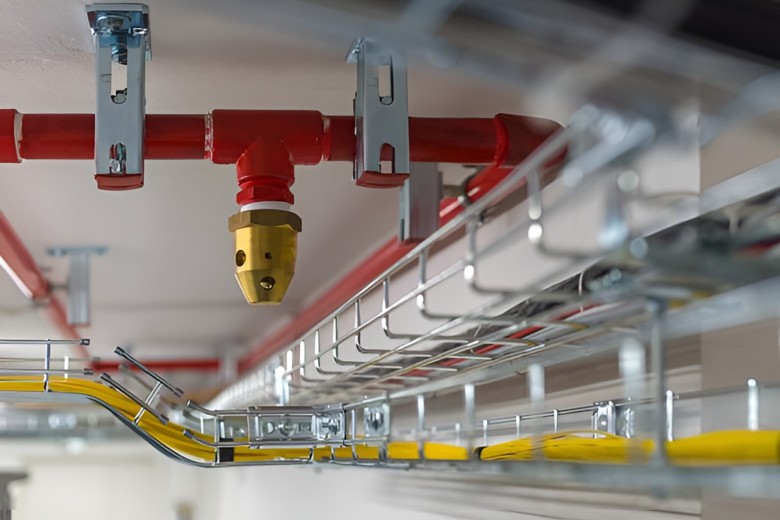
Electrical Cable and Conduit Fire Stopping
Every cable that crosses a fire rated wall creates a hole that fire does not respect. At Firestop, we see this gap treated as an afterthought far too often, usually right before handover. This article explains why electrical cable and conduit fire stopping deserves proper attention, and what a compliant seal actually involves.
Table of Contents
Table of Contents
Key Takeaways
- Every cable and conduit penetration through a fire rated wall or floor must be sealed to match that wall’s rating.
- Electrical faults remain one of the largest single causes of property damage from fire in Victoria.
- 4 and AS4072.1 set the testing and installation benchmarks for compliant fire stopping.
- Cable bundles and conduits each need different sealing approaches, since they behave differently in a fire.
- A penetration register keeps every seal traceable long after the trades have left site.
Why Cable Penetrations Are Such A Weak Point
A fire rated wall or floor is only as strong as its weakest opening. Electricians, data cablers and mechanical trades all need to pass cables through walls, floors and ceilings, and every one of those holes is a potential shortcut for fire and smoke. Unlike a single pipe, cable penetrations often carry dozens of individual cables bundled together, sometimes added to over years as a building’s needs change. That makes them genuinely tricky to seal properly, and genuinely easy to get wrong. Data cabling in particular tends to grow steadily over a building’s life, with new runs added long after the original fire stopping was signed off, which is exactly how a compliant penetration slowly becomes a non compliant one without anyone intending it.
How Electrical Cable Fire Stopping Actually Works
Cable penetrations are typically sealed using a combination of intumescent collars, fire rated sealants, mineral wool packing and purpose built cable transit systems. Intumescent materials expand under heat, closing the gap left behind if a cable insulation burns away, which is exactly the failure mode that makes cable penetrations so different from a solid pipe passing through the same wall. Conduits, by contrast, usually get sealed with fire rated sealant or a purpose designed collar fitted around the conduit itself, since the conduit remains structurally intact even when the cables inside it do not.
- Cable Bundles: Sealed with intumescent wrap, putty or purpose built cable transit devices that allow for future additions.
- Single Cables or Small Bundles: Often sealed with fire rated sealant and backing material.
- Conduits: Sealed with a matched collar or sealant system rated for the conduit material and diameter.
- Mixed Services: Penetrations carrying cables alongside pipes or ducts need a system tested for that exact combination.
The Standards That Actually Matter
In Australia, fire stopping systems for service penetrations are tested against AS1530.4, which establishes the fire resistance level a sealed penetration must achieve. AS4072.1 works alongside it, setting out how penetrations and control joints through fire rated elements should be treated in practice. Both standards feed into the National Construction Code, which requires service penetrations to be fire tested exactly as installed on site, matching the fire resistance level of the wall or floor they pass through. This is not a box ticking exercise. A seal rated for sixty minutes on paper but installed differently to how it was tested provides no real guarantee at all.
Why This Keeps Coming Up As A Problem
Cable and conduit penetrations are frequently left until the last few weeks of a project, handled by whichever trade happens to be finishing services in that area. That approach leads to genuinely avoidable gaps. Victoria’s electrical fire figures make the underlying risk clear. CFA’s preventable fire statistics have consistently identified electrical faults as one of the largest causes of property damage from house fires across the state, alongside cooking related incidents. That risk does not disappear once a building is occupied, since cables get added, removed and rerouted throughout a building’s working life, and each change is a chance for a seal to be disturbed and never properly reinstated.
The broader pattern is not unique to cable penetrations either. Coverage from The Fifth Estate on Australia’s building compliance failures over the past decade, most visibly around non-compliant cladding, has repeatedly pointed to the same underlying issue, product and installation standards that exist on paper but are not consistently verified on site. Fire stopping of cable and conduit penetrations sits in exactly that same category of risk, quiet, easy to overlook, and genuinely dangerous when it is done poorly.
Getting It Right The First Time
- Fire stopping should be planned alongside the electrical and data design, not treated as a last minute trade.
- Every penetration needs a system tested for the specific cables, conduits or bundles passing through it.
- Installers should follow the exact configuration the system was tested under, not an approximate version of it.
- Penetrations should be photographed and recorded before they are closed up or hidden behind finishes.
Keeping Seals Compliant Over Time
A fire stopping system installed correctly on day one can still fail years later if it is disturbed during maintenance or a fit out change. This is where a proper penetration register earns its keep, giving building owners and facility managers a clear, documented record of every sealed penetration, its rating, and its location. Passive fire protection this fits into the wider picture of compartmentation across a building.
The Institution of Fire Engineers Australia has consistently highlighted the importance of professional oversight in passive fire systems, noting that fire safety outcomes depend heavily on the competence of those specifying and installing them, not just the products themselves. Industry submissions from Fire Protection Association Australia have similarly flagged inconsistent training and a lack of allied trade awareness as ongoing barriers to properly sealed penetrations across the sector.
For cable and conduit penetrations specifically, fire stopping of service penetrations covers pipes, cables, ducts and other services running through fire rated walls, floors and ceilings, sealed to AS1530.4 and AS4072.1 by a team that treats this as core work rather than an afterthought.
Conclusion
Cable and conduit fire stopping is easy to overlook and genuinely serious when it fails. If you would like your penetrations assessed, sealed or documented properly, contact us and our Melbourne team will help you get every seal right the first time.
FAQs:
Why does every cable penetration need fire stopping?
Any unsealed gap in a fire rated wall or floor undermines its ability to contain fire and smoke during an incident.
What standard applies to cable and conduit fire stopping in Australia?
AS1530.4 and AS4072.1 set the testing methods and installation requirements for compliant penetration seals.
Can cable fire stopping be added after cables are already installed?
Yes, though the seal must still match a tested system suitable for the exact cables or bundle present.
Do conduits need different fire stopping to cable bundles?
Yes, conduits are usually sealed with a matched collar or sealant, while cable bundles often need intumescent devices.
How often should fire stopping around cables be inspected?
Regular inspections are recommended, particularly after any electrical or data works near existing penetrations.
What happens if fire stopping is installed incorrectly?
An incorrectly installed seal may fail to achieve its rated fire resistance, compromising the wall or floor it protects.

