

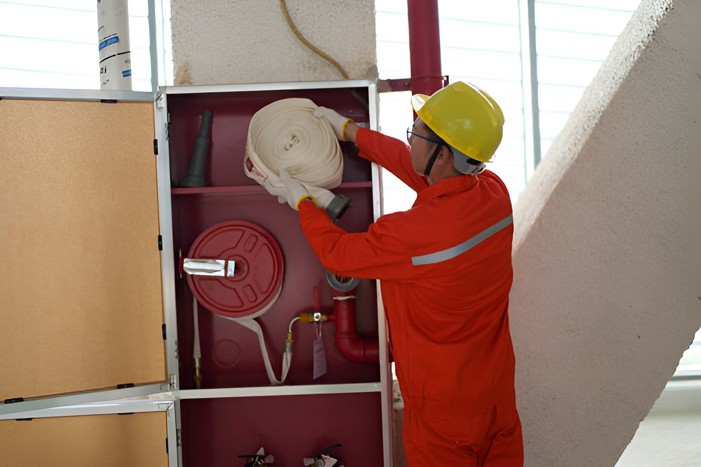
Fire-Stopping Installation Quality and Common Defects
A fire stopping system only works if it was actually installed the way it was tested. At Firestop, we walk into far too many buildings where the paperwork looks fine but the penetration behind the wall tells a different story. This article looks at what good fire stopping installation actually looks like, and the defects we see time and again.
Table of Contents
Table of Contents
Key Takeaways
- Most fire stopping defects come from penetrations left unsealed after later trades disturb them.
- A tested system only performs correctly when installed exactly as it was tested, not approximately.
- Australia’s building compliance failures are well documented, and passive fire is not immune to them.
- Photographic evidence and clear documentation are what separate a defensible seal from a guess.
- Regular inspection catches defects long before they become a genuine safety failure.
What Good Fire Stopping Installation Actually Looks Like
A properly installed penetration seal matches the exact system it was tested under. That means the right product, the right thickness, the right annular gap, and the right substrate, all matching a certified test report rather than a rough approximation of one. It sounds simple written down. On a real site, with dozens of penetrations, tight deadlines and several trades working through the same wall, it is anything but simple. Good installation depends on training, supervision and a genuine understanding of why each detail matters, not just following a checklist. A wall that looks identical from the outside can carry two completely different fire resistance outcomes depending on which product sits inside it, and that difference is invisible until someone actually checks.
The Defects We See Most Often
- Unsealed penetrations left behind by later trades. A cable is added, a pipe is replaced, and the seal is never reinstated.
- Wrong product for the substrate. A system tested on masonry does not automatically perform the same way on plasterboard.
- Incorrect annular gap. Too wide or too narrow, and the tested fire resistance level no longer applies.
- Missing or degraded collars. Intumescent collars that have been painted over, damaged or removed during other works.
- No supporting documentation. A seal with no photograph, no test reference and no record of who installed it or when.
Why This Keeps Happening Across The Industry
Fire stopping defects rarely happen in isolation. They tend to reflect the same pressures that show up across Australian construction more broadly. The Building Confidence Report, prepared for the Australian Building Codes Board by Professor Peter Shergold and Bronwyn Weir, found that building regulatory non-compliance costs Australians an estimated $2.5 billion every year, driven largely by inconsistent oversight and enforcement across the sector. That figure covers far more than passive fire protection, though the same root causes, rushed programs, unclear accountability and inconsistent inspection, apply just as much to a cable penetration as they do to structural work.
The Association of Consulting Architects Australia’s review of the Shergold Weir recommendations pointed to insufficient supervision and auditing as a recurring theme across the industry, alongside a willingness among some practitioners to take shortcuts to save time and money. Coverage explaining the report for homeowners has made a similar point in plainer terms, describing better documentation, clearer trade obligations and tighter oversight of certifiers as the fixes the industry has been working toward ever since.
The Human Cost Of Getting It Wrong
It is worth remembering what sits behind these numbers. ABC News’s reporting on building defects across New South Wales, prompted by the Opal Tower and Mascot Towers evacuations, traced the fallout back to gaps in oversight during construction, developers facing limited legal obligation once apartments are sold, and market pressure to build quickly. Passive fire protection defects are quieter than structural cracking, since they usually stay hidden inside a wall until an inspection or, worse, a fire finds them. That quietness is exactly why installation quality matters so much. Nobody notices a poorly sealed penetration until it is tested for real.
Analysis of the same reforms from an industry perspective on what subcontractors need to know has noted that subcontractors, including trades responsible for fire rated work, are increasingly expected to carry proper documentation and traceability for their work, reflecting a broader shift toward accountability across every trade that touches a fire rated wall or floor, not only the head contractor.
What A Defensible Installation Looks Like In Practice
- Every penetration photographed before it is closed up or hidden behind finishes.
- Product and system references recorded against a specific test report, not a general description.
- Installers trained on the specific systems they are using, not assuming familiarity transfers between products.
- A documented process for reinstating fire stopping whenever a penetration is reopened for later works.
None of this needs to slow a project down significantly. A five minute photograph and a correctly filled register entry costs almost nothing at the time, compared with the cost of tracing an undocumented seal years later during an audit, a sale, or worse, an actual fire event.
Catching Defects Before They Become A Problem
Regular inspection is the most reliable way to catch fire stopping defects before they matter. Proper fire inspection actually looks beyond a surface level walkthrough. Timing matters too, and fire stopping should be installed during construction until the final weeks of a project tends to produce exactly the kind of defects described above.
At Firestop, inspections and audits service exists precisely because defects are so much cheaper and safer to catch early than to discover during an emergency. We assess fire walls, floors, doors, compartmentation and penetration seals against the standard they were meant to meet, not just the standard the paperwork claims they meet. A thorough audit also gives building owners something they can hand to insurers, certifiers or incoming tenants with confidence, rather than a folder of paperwork nobody has actually verified against the building itself.
Conclusion
Fire stopping is only as good as the details behind it, and defects are far cheaper to catch now than after an incident. If you would like your building’s passive fire systems properly assessed, contact us and our Melbourne team will help you understand exactly where you stand, with a clear plan for whatever needs fixing along the way.
FAQs:
What is the most common fire stopping defect found during inspections?
Unsealed penetrations left behind after later trades disturb existing seals are by far the most common defect.
Why does the exact product matter for fire stopping?
A fire rating only applies to the specific tested system, so substituting products can void the intended performance.
How often should fire stopping be inspected for defects?
Regular inspections are recommended, particularly after renovations, fit outs or new service installations nearby.
Can a fire stopping defect be fixed without major disruption?
Yes, most defects can be rectified quickly once identified, without needing to open up large sections of a wall.
Why do fire stopping defects happen so often in Australian buildings?
Rushed programs, inconsistent oversight and unclear accountability across trades are recurring, well documented causes.
Is documentation really necessary for a compliant fire stopping installation?
Yes, without photographic evidence and test references, a seal cannot be reliably verified as compliant later.
